If you ask someone what keeps them from embracing Catholicism, the idea of sitting in a small room and telling their darkest secrets to another human being is usually high on the list.
The objection is incredibly common: “Why do I need to confess my sins to a priest? Why can’t I just go straight to God in my own room?”
It is a completely understandable question. After all, only God can forgive sins. However, the Catholic Church does not teach that priests have their own magical power to forgive sins, nor does it teach that you shouldn’t pray directly to God for forgiveness. The reality is profoundly biblical, and it is rooted in how Jesus chose to dispense His mercy.
Jesus Delegated His Authority
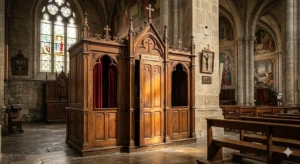
Catholics go to a priest for Confession (also called the Sacrament of Reconciliation) simply because that is the system Jesus explicitly set up.
After His resurrection, Jesus appeared to His Apostles. He didn’t just tell them to go around telling people God loves them. He gave them a very specific, undeniable authority. We see this in the Gospel of John:
“Jesus said to them again, ‘Peace be with you. As the Father has sent me, even so I send you.’ And when he had said this, he breathed on them, and said to them, ‘Receive the Holy Spirit. If you forgive the sins of any, they are forgiven; if you retain the sins of any, they are retained.’” (John 20:21-23)
Think about the logic of that verse. How can the Apostles (and their successors, the priests) know whether to “forgive” or “retain” a sin if they don’t know what the sin is? They aren’t mind readers. The only way to exercise the authority Jesus gave them is if people vocalize their sins to them.
“In Persona Christi”
When a Catholic enters the confessional, they are not confessing to a mere man. The Church teaches that the priest acts in persona Christi capitis—in the person of Christ the Head.
The priest is an instrument. Just as God uses water to baptize and bread to feed us in the Eucharist, He uses the vocal cords and the hands of a priest to deliver His forgiveness. When the priest says, “I absolve you from your sins,” it is actually Christ doing the absolving. The priest is just the physical vessel Jesus is using at that moment.
The Human Need to Hear It
God doesn’t need us to go to a priest; we need to go to a priest. God created us as physical, psychological beings.
If you offend a friend and apologize to them in your head, you might hope they forgive you, but you will still feel anxious. It is only when you look them in the eye and they say, “I forgive you,” that the burden is lifted.
God knows we need that physical assurance. He gave us the Sacrament of Confession so we never have to wonder if we did it right or if we are truly forgiven. We get to hear the physical words of absolute forgiveness spoken out loud, washing away our guilt with 100% certainty.
A Deeper Look at Confession
If you want a fantastic explanation of why Confession is actually a place of victory rather than a place of shame, check out this great video by Fr. Mike Schmitz: